


Guides · Uri
Register an imported car in the canton of Uri: ASSV and COC
In the canton of Uri, an imported vehicle is registered with the Amt für Strassen- und Schiffsverkehr (road and shipping traffic office) in Altdorf: you first send in copies of the documents, the office then schedules the individual inspection, to which you bring the originals, and finally issues the vehicle registration document and the plates. A feature specific to Uri: the certificate of conformity (COC) must be provided as soon as the vehicle has European type approval. Here is the procedure as checked on the canton's official pages on 11 November 2026.
The competent office
The Amt für Strassen- und Schiffsverkehr des Kantons Uri (ASSV, the Uri road and shipping traffic office) which comes under the Sicherheitsdirektion (Security Directorate), is located at Gotthardstrasse 77a, 6460 Altdorf (telephone 041 875 28 00, assv@ur.ch). The Verkehrszulassung division (traffic licensing) deals with registration, licences and plates; the Technik und Schifffahrt division (technical services and shipping) deals with vehicle inspection (telephone 041 875 28 20). Opening hours are no longer published on the office's page; please check directly with the office on ur.ch.
The information on imports is contained in an undated information sheet, Selbstimport von Fahrzeugen (in German), published in the office's list of information sheets.
The procedure step by step
- The transfer. The vehicle can enter Switzerland on valid foreign plates or transfer plates.
- Customs. Customs issue the test report, form 13.20 A, with the proof of customs clearance, and the assessment notice, which the office asks for together with the confirmation of payment. The Federal Office for Customs and Border Security (FOCBS) charges 20 francs for this proof of customs clearance.
- Reporting to FEDRO. Since 1 January 2026, the importer of a category M1 or N1 vehicle (in particular a passenger car or a delivery van) must report its data to the Federal Roads Office (FEDRO) electronically, before the vehicle is first put into service in Switzerland (Article 72a of the Ordinance on Road Traffic Licensing, OAC). Reporting is done on FEDRO's vehicle import portal: the Office then obtains the eCOC where possible (otherwise the importer must supply it with the paper COC), and the data are used to calculate any CO2 penalty, which is imposed by the Swiss Federal Office of Energy (SFOE). This penalty does not apply to vehicles registered abroad more than twelve months before their customs declaration, or six to twelve months before with at least 5000 km, as they are not deemed to be registered for the first time (CO2 Ordinance, Art. 17d para. 3). Uri's information sheet, which predates these rules, still requires an application to FEDRO for a CO2 certificate before registering the vehicle for inspection, for passenger cars and delivery vans first registered in Switzerland or registered abroad less than six months before the customs declaration, and, for a new passenger car, FEDRO's CO2 certificate together with form 13.20 A at the inspection: the federal rule above applies. In addition, the registration document and plates for a passenger car or delivery van are only issued once any CO2 penalty due has been paid in full (Art. 71 para. 1 let. g OAC); according to FEDRO, the vehicle can be registered as soon as the importer has presented the corresponding certificate.
- Copies first. The office only allocates an inspection appointment if you have first sent it the necessary documents, at least as copies or by email.
- The individual inspection. It takes place at the location given in the notice of appointment (the office only publishes its Altdorf address), with all the documents in original, never as copies. According to the general information sheet on inspections, you arrive five minutes before the appointment, with no need to go to the counter. The foreign plates must be removed and handed in after the inspection. For any imported vehicle, the information sheet also requires a durable manufacturer's plate, suitable tyres, a speedometer in km/h, compliant lighting and yellow front indicators.
- Registration. The vehicle is only approved once any defects have been put right and all the documents are together. The vehicle registration document is issued on presentation of the 13.20 A and a valid insurance certificate no more than 30 days old.
The documents required
For an import with a COC, the information sheet asks for the following, in original only:
- the insurance certificate, to be ordered from the insurer, which sends it electronically;
- the 13.20 A test report with the customs stamp;
- the customs assessment notice with the confirmation of payment;
- the COC, issued by the manufacturer in accordance with Annex IX of Directive 70/156/EEC or of Directive 2007/46/EC, as the office's information sheet puts it, or in accordance with Regulation (EU) 2018/858;
- for a vehicle already on the road, all its registration papers, for example the Zulassungsbescheinigungen Teil I and II, with the date of first registration proven by an official document (the "registration card" for an American vehicle);
- the emissions maintenance document for a motor vehicle, with the maintenance carried out, unless exempt.
What the office says about the COC
Uri sets a clear rule: if the vehicle has European type approval, shown by the approval number on the manufacturer's plate or in the registration papers, you must provide the COC. Evidence of front and side impact protection is only required for a vehicle without a COC. Finally, the office points out that the Swiss regulations in force at first registration apply. It does not mention the eCOC.
Without a COC
For a vehicle without European type approval, the information sheet asks for the same documents, plus:
- the technical data not shown in the foreign papers: number of cylinders, engine capacity, power and engine speed, guaranteed weights of the vehicle and of each axle, maximum speed;
- a certificate of compliance with the Swiss exhaust emissions and noise regulations in force at the first registration, issued by the holder of the Swiss type approval or by an official laboratory; the information sheet names three laboratories, in Sennwald, Vauffelin and Nidau;
- evidence of front impact protection for a vehicle with a total weight of up to 2500 kg imported or first registered abroad from 1 July 2007, and of side impact protection, whatever the weight, from 1 October 2007.
From outside the European Union (United States, Australia), American or Californian emissions standards are accepted for passenger cars and delivery vans from model year 1995: the office checks the label in the engine compartment from a photo, but noise evidence is still required.
Deadlines to know
- Registration: Uri publishes no deadline. The federal rule in the Ordinance on Road Traffic Licensing (OAC, VZV in German) applies: a person who has been resident in Switzerland for more than a year (without a break of more than three months) must register a vehicle on foreign plates in Switzerland once they have been using it for more than a month; a vehicle kept in Switzerland for more than a year (again without a break of more than three months) must be registered too (Art. 115 para. 1 let. a and b OAC).
- Insurance: the certificate must not be more than 30 days old.
- Appointment: according to the general information sheet on inspections, to be cancelled at least five working days in advance, otherwise the fee is due. The time needed to get an appointment is not published.
Cantonal fees
The office's 2026 fee tariff gives the scheduled duration of each inspection and allows the actual time to be charged where the effort is above average.
| Service | Fee |
|---|---|
| Inspection of a car, first registration with type approval (30 minutes) | 60 francs |
| Inspection of a car, first registration with EU whole-vehicle type approval (60 minutes) | 120 francs |
| Inspection of a car, first registration without type approval (75 minutes) | 150 francs |
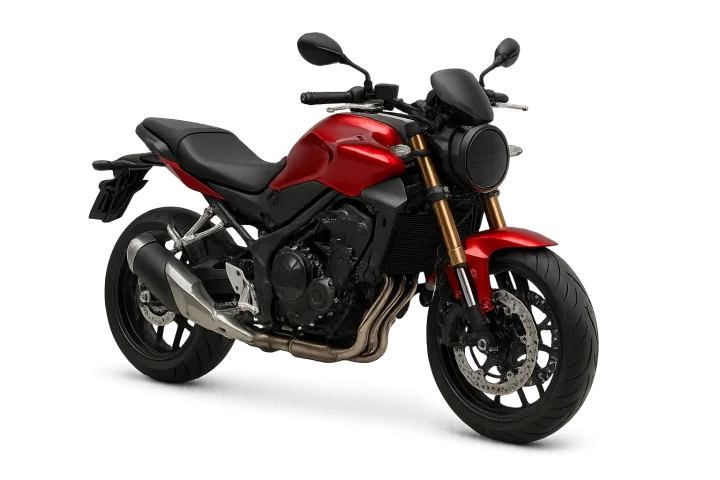
| Inspection of a motorcycle, with or without type approval | 60 or 90 francs |
| Vehicle registration document | 50 francs |
| Pair of number plates | 40 francs |
Special cases
- Vehicle up to two years old: a vehicle imported for your own use is exempt from type approval; if it is no more than two years old since its first registration, the information sheet requires it to be registered in the name of the importer shown on the customs assessment notice. Since 1 January 2026, a vehicle with a European COC is exempt from type approval (Article 4(2) of the Ordinance on the Type Approval of Road Vehicles, ORT) and, according to FEDRO, can be registered for the first time in the name of any person, provided the other registration requirements are met.
- Emissions maintenance: since 1 January 2013, vehicles with on-board diagnostics meeting at least the Euro 3 (petrol) or Euro 4 (diesel) standard are exempt; otherwise, the document is obtained from a Swiss brand representative or from auto-schweiz, before the inspection.
- Electric or hybrid vehicle: evidence of electrical safety and electromagnetic compatibility according to FEDRO's explanatory notes.
- Modified vehicle: guarantee declarations provided for by Swiss law.
- Relocation: Uri publishes no text of its own; its page refers to the customs information.
Where the COC fits into the process
In Uri, the office wants copies of the documents before scheduling the inspection: have the COC in hand before asking for an appointment. Ask the seller for it before buying; if it is missing, only the manufacturer can issue it.
Swiss COC takes care of the process and delivers the original issued by the manufacturer; the order starts from the chassis number and the foreign registration document. Allow 5 to 65 working days depending on the brand, from 166.90 EUR, and bear in mind the federal one-month rule on use (Article 115 OAC) if you have lived in Switzerland for more than a year and drive on foreign plates: order as soon as the sale is signed. The catalogue of 176 brands shows the price, lead time and documents for each one, and the how it works page describes the ordering process. The brand pages, for example BMW, Volkswagen, Audi or Mercedes-Benz, set out the lead time and documents for each manufacturer. Swiss COC handles the certificate only: not customs clearance, inspection or registration.
Crossing the border and the federal taxes are covered in our guide importing a car from the EU into Switzerland, and the eCOC in eCOC: what changes in 2026.
Frequently asked questions
Do I need a COC in Uri?
Yes, as soon as the vehicle has European type approval. Without it, the information sheet requires in particular the technical data not shown in the foreign papers, an exhaust emissions and noise certificate, and the frontal impact (up to 2500 kg) and side impact evidence.
Do I have to send the file before the inspection?
Yes, at least as copies or by email, otherwise the office sets no appointment; at the inspection, the originals are required.
How much does the inspection of an imported car cost?
According to the 2026 tariff, 120 francs for a first registration with EU whole-vehicle type approval and 150 francs without type approval. The vehicle registration document and the plates come on top.
Does the vehicle have to be registered in the importer's name?
According to Uri's information sheet, yes, if it is no more than two years old since its first registration, in the name of the importer shown on the assessment notice. Since 1 January 2026, however, a vehicle with a European COC can, according to FEDRO, be registered for the first time in the name of any person, provided the other requirements are met.
Information checked on 11 November 2026 on the official pages of the Uri Amt für Strassen- und Schiffsverkehr, in its information sheet "Selbstimport von Fahrzeugen" and in its 2026 fee tariff, and in federal law (OAC, Articles 71, 72a and 115; CO2 Ordinance, Art. 17d; ORT, Article 4(2)). Procedures and fees may change: the office's pages are authoritative.
Need the certificate for your vehicle?
Enter your chassis number (VIN): the brand, price and lead time are displayed immediately.