


Guides · Neuchâtel
Register an imported car in the canton of Neuchâtel: SCAN and COC
In the canton of Neuchâtel, an imported vehicle is registered with the Service cantonal des automobiles et de la navigation (SCAN, the cantonal motor vehicle and navigation office) in Malvilliers: after customs, you request an electronic insurance certificate, send the import registration application with the documents, then take the vehicle to SCAN for inspection, and SCAN issues the vehicle registration document and the Neuchâtel number plates. Neuchâtel treats the eCOC separately: a new passenger car that has one follows a shorter list of documents, with no paper COC. Here is the procedure as checked on the canton's official pages on 11 November 2026.
The competent office
The Service cantonal des automobiles et de la navigation (SCAN), an autonomous public-law institution, is located in Malvilliers: Champs-Corbet 1, 2043 Boudevilliers, where imported vehicles are inspected. Import files go to the Secteur administration véhicules (vehicle administration section), at the same address. SCAN answers on +41 32 889 13 99 (virtual switchboard outside opening hours); it publishes no email address and receives messages through its contact form. The counter is open on Mondays, Tuesdays and Fridays from 8.30 to 12.30, and on Wednesdays and Thursdays from 8.30 to 18.00.
The reference page is Immatriculer un véhicule importé (page in French). It refers to the information sheet Importation individuelle de véhicules : informations (Individual import of vehicles: information; IN 301 05, version of 17 September 2026, in French) and to the form Demande d'immatriculation - Importation (Registration application, import; FO 301 21, version of 11 December 2025, in French).
The procedure step by step
- Before buying. For a vehicle not approved in Europe or an old one (before 1995), SCAN advises contacting it with a complete file before buying, so as not to have to give up the purchase or pay heavy modification costs.
- Customs. Customs issue the test report, form 13.20 A; the Federal Office for Customs and Border Security (FOCBS) charges 20 francs for this proof of customs clearance.
- Reporting to FEDRO. Since 1 January 2026, the importer of a category M1 or N1 vehicle (in particular a passenger car or a delivery van) must report the vehicle's data to the Federal Roads Office (FEDRO) electronically, before the vehicle is first put into service in Switzerland (Article 72a of the Ordinance on Road Traffic Licensing, OAC). Reporting is done on FEDRO's vehicle import portal: the Office then obtains the eCOC where possible (otherwise the importer must supply it with the paper COC), and the data are used to calculate any CO2 penalty, which is imposed by the Swiss Federal Office of Energy (SFOE). This penalty does not apply to vehicles registered abroad more than twelve months before their customs declaration, or six to twelve months before with at least 5000 km, as they are not deemed to be registered for the first time (CO2 Ordinance, Art. 17d para. 3). SCAN requires the FEDRO certificate validating the CO2 levy for vehicles that are subject to it.
- Insurance. Ask your insurer for an electronic insurance certificate, stating that the vehicle is an import; a trailer does not need one.
- The application. Fill in and print form FO 301 21 (keeper, parking location, availability, mileage, plates). Sign it and send everything by post, hand it in at SCAN or submit it scanned through the contact form.
- The appointment. SCAN's experts check the file, then offer an inspection date.
- The inspection. Come to SCAN with the inspection notice, which allows you to drive without plates, the foreign plates if there are any and, if the file was sent scanned, the original documents. For some new cars with a paper COC, the matter can be dealt with administratively.
- The plates. Once the inspection has been passed, SCAN issues the new vehicle registration document and the Neuchâtel number plates.
The documents required
The page asks at least for the 13.20 A, the CO2 certificate for a vehicle subject to the levy, the COC "if it exists", the foreign registration document of a vehicle already registered, the technical data proved by an official document and a photo of the manufacturer's plate. Form FO 301 21 asks, for a vehicle that is not new, for the original foreign registration document. Information sheet IN 301 05 sets out, depending on the vehicle:
- new passenger car with an eCOC: the 13.20 A, completed on line 26 following the published example, the CO2 certificate if the vehicle is subject to the levy, a Swiss third-party liability insurance certificate and, if it has already been registered, proof of first registration;
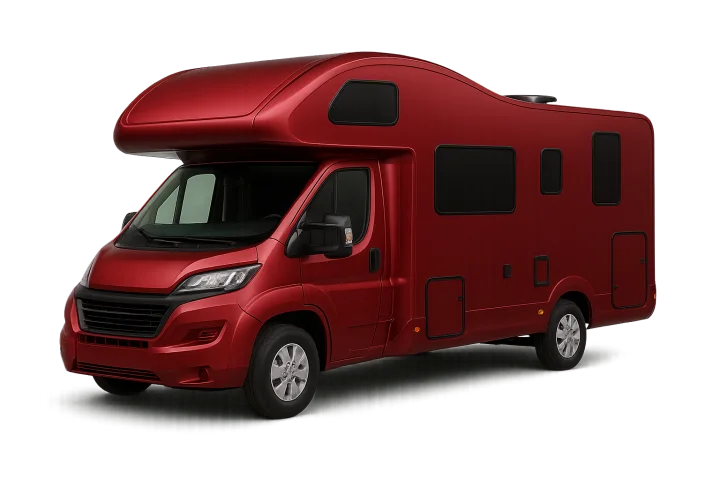
- new passenger car or motorhome with a paper COC: the same documents, the COC and photos of the manufacturer's plate and of the chassis number, whose location is shown on the COC, of the car seen from the front left and the rear right, of the odometer and, for a vehicle with a tow bar, of its plate;
- other vehicle with a paper or electronic COC: the same basic documents, the COC and a photo of the plate; the vehicle must be clean and comply with the regulations;
- vehicle with a declaration of conformity from the Swiss importer: this declaration replaces the COC.
What the office says about the COC
SCAN names the eCOC and gives it a category of its own: "Voiture de tourisme neuve disposant d'un certificat de conformité européen électronique (e-COC / IVI-X)" (new passenger car with an electronic European certificate of conformity). Cars count as new if they were registered abroad one year ago or less, with 2000 km at most ("moins de 2000 km", i.e. less than 2000 km, according to a note on the example of a 13.20 A), and have no modification that must be reported. For them, neither a paper COC nor photos are needed: the published example of a 13.20 A shows "IVI" in field 24 and, on line 26, the entry "Neuf" (new) and the signature of the person who read the mileage. For FEDRO (IRE 13.20 instructions, as at 1 October 2023), the entry "IVI" in field 24 indicates a vehicle registered on initial data based on a COC; the "X" in "IVIX" shows that the importer has refused publication of certain data.
Without a COC
A vehicle built to European regulations with no COC available is registered with the same documents, plus its technical data proved by an official document, such as the registration document or the owner's manual, and a photo of the plate. For a vehicle not built to European regulations, you also need the customs receipts ("acquis de douane"), an exhaust emissions certificate, through a European partial type approval or a measurement in Switzerland, a noise certificate, and proof of electrical safety and electromagnetic compatibility.
Deadlines to know
- Vehicle bought abroad by a resident: SCAN's pages publish no deadline. The federal rule in the Ordinance on Road Traffic Licensing (OAC, VZV in German) applies: a person who has been resident in Switzerland for more than a year (without a break of more than three months) must register a vehicle with foreign plates in Switzerland once they have been using it for more than a month; a vehicle kept in Switzerland for more than a year (again without a break of more than three months) must be registered too (Art. 115 para. 1 let. a and b OAC).
- Moving from abroad: twelve months from entry into Switzerland, according to the residence permit, to exchange the driving licence and the plates; SCAN advises contacting it after ten months at the latest.
- Vehicle not cleared through customs: it can be driven until the customs authorisation expires, two years after entry into Switzerland, but Z plates are required from twelve months.
Cantonal fees
SCAN's import page, which is undated, publishes the cost of the services itself; SCAN's legal fee schedule was not consulted.
| Service | Fee |
|---|---|
| Inspection | between 60 and 200 francs |
| Vehicle registration document | 50 francs |
| Plate | 25 francs per plate |
Special cases
- Removal goods, trousseau or inheritance (form 18.44): customs decide on the status; the inspection then follows a simplified procedure, and neither customs duty nor the vehicle tax is due. Without this status, the inspection is a standard one and the vehicle must fully meet Swiss technical regulations.
- Vehicle not cleared through customs (form 15.30): simplified procedure and Z plates, for 24 months at most.
- United States and Canada: the emissions label can prove exhaust compliance for a vehicle built from 1995 (Canada: 1998), according to SCAN's information sheet, but the noise measurement is compulsory; measurements are possible at the HES (university of applied sciences) in Biel/Bienne for exhaust emissions, and for noise at the DTC, at FAKT or at other motor vehicle offices.
Where the COC fits into the process
In Neuchâtel, the paper COC goes in with application FO 301 21, even before the appointment. A new passenger car with an eCOC can do without it: ask the seller whether this is the case; otherwise, ask for the COC before buying, and if it is missing, only the manufacturer can issue it.
Swiss COC takes care of the process and delivers the original issued by the manufacturer; the order starts from the chassis number and the foreign registration document. Allow 5 to 65 working days depending on the brand, from 150 CHF, and bear in mind the federal one-month rule on use, as SCAN publishes no deadline for a resident: order as soon as the sale is signed. The catalogue of 176 brands shows the price, lead time and documents for each one, and the how it works page describes the ordering process. The brand pages, for example BMW, Volkswagen, Audi or Mercedes-Benz, set out the lead time and documents for each manufacturer. Swiss COC handles the certificate only: not customs clearance, inspection or registration.
Crossing the border and the federal taxes are covered in our guide importing a car from the EU into Switzerland, and the eCOC in eCOC: what changes in 2026.
Frequently asked questions
Do I need a COC in Neuchâtel?
No: SCAN asks for it "if it exists"; without a COC, a vehicle built to European rules is registered on the basis of its technical data.
Does SCAN accept an eCOC?
Yes: its information sheet provides an "e-COC / IVI-X" category for new passenger cars; the 13.20 A is then completed on line 26.
Where does the inspection take place?
At SCAN, in Malvilliers. The inspection notice allows you to drive there without plates.
What happens to my foreign number plates?
You must bring them to the inspection. Form FO 301 21 has a box for authorising SCAN to destroy them.
Information checked on 11 November 2026 on SCAN's official pages (import, contact, access and opening hours, moving from abroad), in its information sheet IN 301 05, its form FO 301 21 and its example of form 13.20 A, and in federal law (OAC, Articles 72a and 115; CO2 Ordinance, Article 17d) and FEDRO's instructions on form 13.20. Procedures and fees may change: the office's pages are authoritative.
Need the certificate for your vehicle?
Enter your chassis number (VIN): the brand, price and lead time are displayed immediately.