


Guides · Aargau
Register an imported car in Aargau: Strassenverkehrsamt and COC
In the canton of Aargau, an imported vehicle is registered with the Strassenverkehrsamt (road traffic office), after a technical inspection at one of its inspection centres: you clear the vehicle through customs, send the file as copies by email or by post, receive the inspection notice by post, and then leave with Aargau number plates. For the office, the certificate of conformity (COC) simplifies the procedure without guaranteeing approval. Here is the procedure as checked on the canton's official pages on 11 November 2026.
The competent office
The Strassenverkehrsamt des Kantons Aargau (the Aargau road traffic office), which comes under the Departement Volkswirtschaft und Inneres (Department of Economic Affairs and the Interior), handles imports through its technical section (Sektion Technik). Its head office is in Schafisheim (Länzert 2), one of its three inspection locations along with Wettingen (Halbartenstrasse 5) and Frick. The file is sent to stva.technik@ag.ch, or by post to Strassenverkehrsamt des Kantons Aargau, Technik, Postfach, 5001 Aarau.
The reference pages, in German, are grouped under Fahrzeug Import: vehicles bought abroad, moving to Switzerland, import with or without a COC, import from the United States and inspection locations.
The procedure step by step
- Customs. The canton makes customs clearance the first step. Customs issue the test report, form 13.20 A, with their stamp; the Federal Office for Customs and Border Security (FOCBS) charges 20 francs for this proof of customs clearance. Also keep the customs and VAT assessment notices: the office asks for them.
- Reporting to FEDRO. Since 1 January 2026, the importer of a vehicle in category M1 or N1 (in particular a passenger car or a delivery van) must report the vehicle's data to the Federal Roads Office (FEDRO) electronically, before the vehicle is first put into service in Switzerland (Article 72a of the Ordinance on Road Traffic Licensing, OAC). Reporting is done on FEDRO's vehicle import portal: the Office then obtains the eCOC where possible (otherwise the importer must supply it with the paper COC), and the data are used to calculate any CO2 penalty, which is imposed by the Swiss Federal Office of Energy (SFOE). This penalty does not apply to vehicles registered abroad more than twelve months before their customs declaration, or six to twelve months before with at least 5000 km, as they are not deemed to be registered for the first time (CO2 Ordinance, Art. 17d para. 3). Motorcycles are not affected.
- Insurance. Order the electronic insurance certificate from a Swiss insurer: it must be valid on the date of registration and be no more than 30 days old. A trailer does not need one, except for the transport of dangerous goods.
- The file. Send copies of all the documents, by email or by post, with the canton's two forms: the inspection application (Gesuch für die Prüfung eines Fahrzeuges) and the registration application (Gesuch für die Verkehrszulassung).
- The inspection notice. Once the file is complete, the office sends the inspection date by post, taking your preferences into account as far as possible.
- The inspection. Present the vehicle with the originals of all the documents sent and the foreign plates. A passenger car with a COC under Directive 2007/46/EC or Regulation (EU) 2018/858 that is then registered in Aargau in the name of its importer can also be inspected at the two test centres of the Auto Gewerbe Verband Schweiz (AGVS, the Swiss motor trade association), in Zofingen and Kleindöttingen.
- The plates. Aargau plates are only issued once the vehicle has passed the inspection and the foreign documents and plates have been handed in. The office itself notifies the authority in the country of origin that the foreign registration has ended.
The documents required
To apply for the inspection, copies are sufficient:
- the canton's two forms (inspection and registration);
- the foreign registration documents, for example the German Zulassungsbescheinigung;
- the 13.20 A test report with the customs stamp;
- the customs and VAT assessment notices;
- the COC or, failing that, an exhaust emissions and noise certificate issued by the brand's Swiss general importer;
- for a vehicle built before 2005, the emissions maintenance document issued by a Swiss garage;
- where applicable, the customs authorisation (forms 18.44, 18.45, 18.46, 15.30 or 15.40).
For registration, the office also asks for a copy of the residence permit, the originals of the foreign documents (for Germany, parts I and II of the Zulassungsbescheinigung), the foreign plates, the original 13.20 A and the electronic insurance certificate. For a vehicle less than a year old, the FEDRO confirmation on CO2 may be required. The "Import mit COC" page, however, asks for this confirmation and the insurance certificate together with the inspection application: arrange both before sending the file.
What the office says about the COC
For Aargau, the COC is issued by the manufacturer and is requested from the brand's representative. A copy is enough for the application; the original must be presented on the day of the inspection at the latest. In its information sheet "Was ist ein COC", the office states that a certificate drawn up by a sales organisation, a point of sale, or a foreign importer or exporter does not count as a COC, and that COCs are in practice only found for vehicles from the end of 1995 or later (full European type approval of cars has been mandatory for new types since 1 January 1996).
On its "Import mit COC" page, the canton warns that the COC is no guarantee of approval, for example for an end-of-series or small-series vehicle: the Swiss regulations on exhaust emissions, noise, on-board diagnostics, seat belts, speed limiters and brakes apply in every case. The canton's online form for imports with a COC (the "Gesuch für die Prüfung eines Fahrzeuges" link on that page) accepts FEDRO's eCoC confirmation ("ASTRA-Bestätigung eCoC") in place of the COC and, for a vehicle subject to the CO2 sanction, asks for the document downloaded from the FEDRO import portal.
Deadlines to know
- Vehicle bought abroad by a person who has been resident in Switzerland for more than a year: to be registered within one month of the date of import. According to the office's information sheet, the file must then be sent immediately.
- Moving to Switzerland: within one year of your own entry into the country, for a vehicle you have owned for at least six months before arriving; according to the office's information sheet, the file must be sent one month before this deadline.
- Vehicle brought in without valid plates: according to the office, no registration deadline applies.
- Vehicle not cleared through customs: one year after your own entry into the country, a switch to Swiss customs plates if the foreign registration and insurance are still valid, for twelve months at most, then customs clearance and ordinary registration.
The canton does not publish a waiting time for the inspection notice. The first two deadlines follow the federal rule in Article 115 OAC, which the office cites.
Cantonal fees
The Strassenverkehrsamt fees page (as at 5 January 2026) sets unit rates. It gives no total amount for an import inspection, which may require several inspection units.
| Service | Fee |
|---|---|
| Vehicle registration document | 20 francs |
| Pair of number plates | 20 francs |
| Single plate | 10 francs |
| Inspection of a car up to 3.5 t, per 20-minute unit | 58 francs |
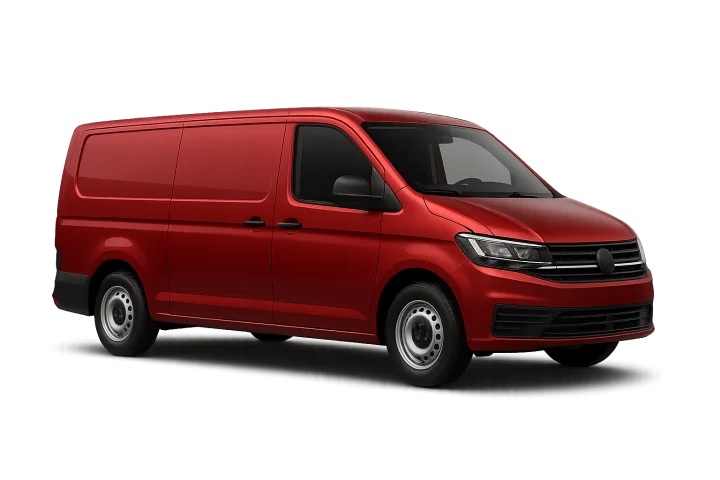
| Inspection of a delivery van up to 3.5 t, per 30-minute unit | 87 francs |
Special cases
- Relocation, marriage or inheritance: customs issue form 18.44, 18.45 or 18.46 with the vehicle clearance stamp; the deadline is one year from your own entry into the country, but one month from the date of import if you have lived in Switzerland for more than a year. For these vehicles, the office does not ask for evidence on the front end, frontal and side impact protection, exhaust emissions or noise; without a COC, a restriction on change of keeper is entered in the vehicle registration document.
- Without a COC: the file follows FEDRO's instructions of 27 February 2014 on exemption from type approval. You need technical data from a verifiable source (engine capacity, power and rated engine speed, number of cylinders, gross weight, axle loads, maximum speed) and, depending on the vehicle's age, category and weight, evidence for pedestrian protection, the tyres, the electrical safety and electromagnetic compatibility of an electric vehicle, and driver assistance systems and cybersecurity (first registration from 1 July 2024). Evidence for exhaust emissions and noise comes from the Swiss general importer or a recognised body, such as the Dynamic Test Center in Vauffelin.
- American vehicle: a photo of the emissions label (accepted for cars and delivery vans from model year 1995), noise evidence from a recognised body, pedestrian protection at the front (cars up to 2500 kg) and, for a vehicle with no previous ordinary registration abroad, occupant protection in frontal and side impacts depending on category and weight, suitable tyres, a laminated windscreen, a speedometer in km/h and lighting to the Swiss specification.
- Vehicle over 30 years old: the office may require a FIVA identity card as proof of the date of first registration.
Where the COC fits into the process
In Aargau, the COC is part of the file sent before the inspection notice: a copy is enough at that stage, and the original is shown at the inspection. Without it, the file goes down the more demanding route of technical data and certificates. Ask the seller for it before buying; if it is missing, only the manufacturer can issue it.
Swiss COC takes care of the process and delivers the original issued by the manufacturer; the order starts from the chassis number and the foreign registration document. Allow 5 to 65 working days depending on the brand, from 150 CHF. With one month to register a vehicle bought abroad, order as soon as the sale is signed. The catalogue of 176 brands shows the price, lead time and documents for each one, and the how it works page describes the ordering process. The brand pages, for example BMW, Volkswagen, Audi or Mercedes-Benz, set out the lead time and documents for each manufacturer. Swiss COC handles the certificate only: not customs clearance, inspection or registration.
Crossing the border and the federal taxes are covered in our guide importing a car from the EU into Switzerland, and the eCOC in eCOC: what changes in 2026.
Frequently asked questions
Do I need a COC in Aargau?
No, but it is the simple route. Without a COC, you need technical data and exhaust emissions and noise certificates, from the Swiss general importer or a recognised body. For relocation, marriage or inheritance these certificates are not required, but without a COC a restriction on change of keeper is entered in the vehicle registration document.
Do I have to send the original COC with the file?
No: a copy is enough for the application. The original must be presented on the day of the inspection at the latest.
Can I have the car inspected somewhere other than Schafisheim?
Yes. The office also carries out inspections in Wettingen and Frick, and a passenger car with a COC under Directive 2007/46/EC or Regulation (EU) 2018/858 that is then registered in Aargau in the name of its importer can go to the test centres in Zofingen or Kleindöttingen.
Who deregisters the vehicle abroad?
The office itself: it notifies the foreign authority at the time of the Swiss registration, after collecting the foreign documents and plates.
Information checked on 11 November 2026 on the official pages of the Aargau Strassenverkehrsamt, in its information sheets and on its fees page, and in federal law (OAC, Articles 72a and 115; CO2 Ordinance, Article 17d). Procedures and fees may change: the office's pages are authoritative.
Need the certificate for your vehicle?
Enter your chassis number (VIN): the brand, price and lead time are displayed immediately.