
Guides · Importing into Switzerland
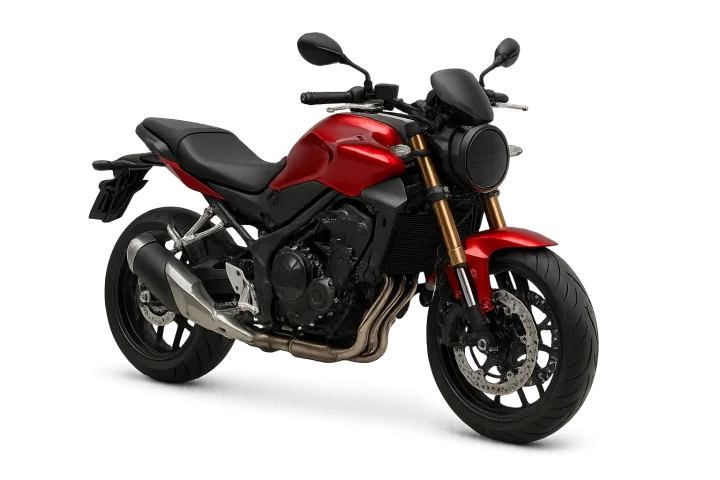
Importing a motorcycle or scooter into Switzerland: the COC
To import a motorcycle or scooter into Switzerland, you declare it to customs, pay 8.1% VAT, receive form 13.20A and then present it to the cantonal road traffic office with its technical data, which the manufacturer's certificate of conformity (COC) brings together in one document. The 4% automobile tax charged on cars does not cover motorcycles.
What customs charge on a two-wheeler
The motorcycle is declared, without waiting to be asked, when it enters Switzerland, at a customs office that handles commercial goods and during its opening hours, with the invoice or purchase contract, the foreign registration papers, even if cancelled, and proof of identity.
| Item | Motorcycle or scooter |
|---|---|
| Customs duty | Abolished since 1 January 2024 for industrial products, whatever the origin |
| Automobile tax (4%) | Not due: the law covers passenger cars, plus minibuses and delivery vans up to 1600 kg |
| Swiss VAT | 8.1% |
| Form 13.20A | 20 CHF |
Two clarifications. A quad is not treated like a motorcycle: customs classify it with passenger cars, so the 4% tax is due. As for the CO2 penalty, it concerns passenger cars, delivery vans, light articulated tractors and certain heavy vehicles: a motorcycle falls into none of these categories.
If you move your residence to Switzerland with a motorcycle you have used for at least six months and will go on using, it comes in free of charges as relocation goods, using form 18.44. The customs stage is described step by step in the guide importing a car from Germany into Switzerland and, form by form, in the SwissCarInfo import guide.
The file for the cantonal office
A vehicle with a European certificate of conformity (COC) is exempt from Swiss type approval and is registered directly with the cantonal road traffic office. The office asks for at least the following documents, and several cantons want to see the originals at the inspection at the latest:
- the COC issued by the manufacturer;
- the foreign registration papers, if the motorcycle has already been on the road;
- form 13.20A bearing the customs stamp or a valid QR code, together with the assessment decision;
- an insurance certificate from a Swiss insurer.
The certificate supplies the technical data, which generally avoids a full individual inspection. The inspection before the vehicle is put on the road is still required, and a COC alone does not guarantee registration: Swiss requirements, in particular on noise and exhaust emissions, must be met. For a modified motorcycle, the cantonal office asks for additional evidence.
Noise, the sensitive point for an imported motorcycle
A motorcycle's certificate of conformity (COC) states its stationary noise level, in dB(A) with the engine speed, and its drive-by noise. In Switzerland, the stationary value is entered in the vehicle registration document; if the COC does not give it, the motor vehicle office measures it. During an inspection, the near-field measurement may exceed the registered value by 5 dB(A) at most.
The Ordinance on the Technical Requirements for Road Vehicles prohibits any unnecessary intervention that increases noise, even if the limit is respected, and any modification that changes exhaust or noise emissions must be reported and inspected.
What some cantons specify
- Aargau: a copy of the COC is only accepted for registering the inspection request; the original must be presented at the inspection at the latest.
- Basel-Stadt: the inspection takes place at the vehicle testing station for both Basel cantons in Münchenstein, where the documents submitted beforehand must be brought in the original; the insurance certificate, obtained from a Swiss insurer, is transmitted electronically.
- Zurich: on a motorcycle with a top speed above 45 km/h, tyres of different construction (radial and bias-ply) are only allowed if the COC, the type approval or the manufacturer provides for it; federal law allows them on a motorcycle.
- Lucerne: motorcycles are not subject to the emission maintenance requirement.
- Bern: the inspection of a motorcycle before registration costs 120 francs with a COC, and 180 francs without a COC or type approval.
A motorcycle COC: what is different
Separate legislation
Two-wheelers belong to category L, which covers two- and three-wheel vehicles and quadricycles. Their EU type approval does not come under the regulation that applies to cars but under Regulation (EU) No 168/2013, which replaced Directives 92/61/EEC and 2002/24/EC. A motorcycle COC nevertheless does the same job as a car COC.
Since when motorcycles have had a COC
Under European law, motorcycle type approval was first governed by Directive 92/61/EEC of 1992, then by Directive 2002/24/EC, and since 1 January 2016 by Regulation (EU) No 168/2013. These texts do not tell you what a manufacturer still issues today: the brand page states the earliest year accepted, where there is one. If the seller holds the certificate, ask for it before you buy. If it has been lost, the manufacturer must supply a duplicate for ten years after production, as explained in the guide lost COC or never received one.
Without a COC
Where no certificate exists, for instance for a machine built for a market outside the European Union, the keeper has to supply the technical data (engine, displacement, power, guaranteed weight, top speed) and prove that Swiss exhaust and noise requirements are met. That evidence comes from the foreign papers, EU partial approvals or a report from a recognised test body. Check with the cantonal office before you buy.
Ordering the COC for your motorcycle
Our catalogue covers 176 brands, including motorcycle and scooter manufacturers: see for example the Ducati page or the full list of brands. Some are offered on quotation.
- Enter the chassis number (VIN, 17 characters) and choose the brand.
- Upload the documents requested: the foreign registration certificate (Zulassungsbescheinigung Teil I, carte grise, carta di circolazione) or, if the motorcycle is not yet registered, the purchase invoice; some brands also ask for the invoice, proof of identity or a photo of the manufacturer's plate. The guide documents needed to order a COC lists them.
- Pay the price shown before payment, from 166.90 EUR, by one of the methods offered at the payment step: they depend on your country, your currency and the brand.
The manufacturer issues the certificate within an indicative 5 to 65 working days depending on the brand, counted from the day your file is complete; we then deliver it by Swiss Post, tracked for an address in Switzerland. Since customs do not ask for the COC, you can order it as soon as you buy and clear the motorcycle in parallel. Swiss COC does not handle customs clearance, the inspection or registration.
Frequently asked questions
Is the 4% tax due on a motorcycle?
No. The automobile tax covers passenger cars, minibuses and light delivery vans; motorcycles and scooters are not included. VAT at 8.1% and the fee for form 13.20A remain due. A quad, by contrast, is taxed like a passenger car.
Can a motorcycle be imported into Switzerland without a COC?
Yes, but you then have to prove the technical data and compliance with the noise and exhaust requirements yourself. Where a COC exists for the machine, it replaces that evidence with a single document.
Is the COC for a scooter or moped ordered in the same way?
Yes: the order also starts from the chassis number, and availability is shown on the brand page. In Switzerland, a scooter limited to 45 km/h, with 4 kW and 50 cm3 at most, is a light motorcycle: it carries a yellow plate and can be ridden from the age of 15 with the A1 subcategory. A foreign moped that does not match a Swiss type in every respect is registered as a motorcycle or light motorcycle, and the Swiss "Mofa" is limited to 30 km/h.
My motorcycle is restricted to 35 kW: what does the COC say?
For a motorcycle whose power can be converted between the restricted version and full power, the COC states the factory configuration and, for the other configuration, values marked "VC". Swiss law adds that a motorcycle without sidecar of more than 11 kW and no more than 35 kW, with a power-to-weight ratio in running order above 0.1 kW/kg but no more than 0.2 kW/kg, must not be derived from a motorcycle with more than twice its power.
What happens if the manufacturer refuses to issue the certificate?
If the manufacturer refuses to issue the certificate, we return its tariff to you if it returns it to us, together with the delivery charges; the handling fee remains due (article 10 of our general terms and conditions). You then need to gather the technical evidence that the cantonal road traffic office accepts in place of the certificate.
Need the certificate for your vehicle?
Enter your chassis number (VIN): the brand, price and lead time are displayed immediately.